
In distributed container orchestration systems, nodes are categorized into two fundamental types: manager nodes and worker nodes. Each type serves distinct purposes, carries different responsibilities, and operates under different constraints. Understanding these differences is crucial for designing resilient, efficient, and maintainable container infrastructure.
The Fundamental Role Distinction
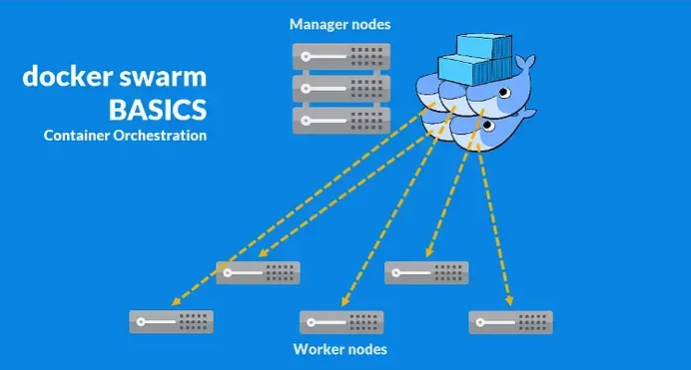
Manager nodes and worker nodes represent a division of labor in orchestration architecture. Manager nodes handle control plane operations—the decision-making, coordination, and administrative functions that keep the cluster running. Worker nodes focus on the data plane—executing the actual workloads, running containers, and processing application traffic.
This separation allows specialization. Manager nodes can optimize for consistency, reliability, and administrative capabilities without being burdened by application workload. Worker nodes can dedicate their resources to running applications without the overhead of cluster management duties.
The distinction isn't merely organizational; it's architectural. Manager nodes participate in consensus algorithms, maintain authoritative state, and make scheduling decisions. Worker nodes receive instructions, execute tasks, and report status. This asymmetric relationship creates a clear hierarchy within the cluster.
Manager Node Responsibilities
Manager nodes are the brains of the cluster. They maintain the desired state of the system, storing complete information about all services, tasks, networks, and configuration. When you define what should run in the cluster, manager nodes are responsible for making that definition a reality.
These nodes run the orchestrator's scheduler, which decides where tasks should run. The scheduler evaluates resource availability, placement constraints, and affinity rules to determine optimal task placement. This decision-making happens exclusively on manager nodes—worker nodes never make placement decisions themselves.
Manager nodes also handle API requests. When administrators or automation systems interact with the cluster, they communicate with manager nodes. These nodes authenticate requests, validate input, update the cluster state, and return responses. The API layer is a manager-exclusive responsibility.
Cluster state storage is another critical manager function. Manager nodes maintain a distributed database using Raft consensus. This database contains everything the cluster needs to know: service definitions, network configurations, secrets, and the current state of all tasks. Worker nodes don't participate in this database; they only receive the information they need to execute their assigned work.
Worker Node Responsibilities
Worker nodes are the muscle of the cluster. Their primary job is to run containers—the actual application workloads that the cluster exists to support. When the scheduler assigns a task to a worker node, that node pulls the necessary images, creates containers, manages their lifecycle, and ensures they keep running.
Worker nodes monitor the health of their assigned tasks. They execute health checks, detect failures, and report status back to manager nodes. If a container crashes, the worker node detects this and informs the manager, which can then reschedule the task elsewhere if needed.
Resource management happens on worker nodes. Each node tracks its own CPU, memory, disk, and network usage. It reports these metrics to manager nodes, which use this information for scheduling decisions. The worker itself enforces resource limits on containers, ensuring no single container monopolizes node resources.
Network connectivity for containers is managed by worker nodes. They configure networking interfaces, implement network policies, and route traffic between containers. While network definitions come from manager nodes, the actual implementation—the plumbing that makes container networking work—is a worker node responsibility.
Raft Consensus and Manager Quorum
Manager nodes use the Raft consensus algorithm to maintain consistent state across multiple managers. Raft requires a quorum—a majority of manager nodes—to make decisions. With three managers, at least two must agree. With five managers, at least three must agree. This quorum requirement ensures consistency even when some managers fail.
The quorum mathematics explains why you should always have an odd number of managers. With two managers, you still need two for quorum—losing one manager makes the cluster unable to make decisions. Three managers tolerate one failure. Five managers tolerate two failures. The odd number ensures that a simple majority truly represents more than half the managers.
Manager nodes continuously communicate to maintain this consensus. They exchange heartbeats, replicate state changes, and vote on updates. This communication overhead is why you shouldn't have too many managers—more managers means more coordination traffic and slower consensus.
Only manager nodes participate in Raft. Worker nodes are completely unaware of the consensus process. They receive commands from the current Raft leader and execute them. This simplification allows worker nodes to focus entirely on workload execution without the complexity of distributed consensus.
Leader Manager Election
Among manager nodes, one serves as the leader at any given time. The leader is responsible for making scheduling decisions, processing API requests, and coordinating cluster changes. Other managers are followers—they replicate the leader's state and stand ready to become leader if needed.
Leader election happens automatically through Raft. When the cluster starts or when the current leader fails, remaining manager nodes hold an election. The election process is quick, typically completing in seconds. During this brief period, the cluster can't process changes, but existing workloads continue running unaffected.
The leader handles all write operations. When you create a service or update configuration, that request goes to the leader. Followers can handle read operations, improving cluster responsiveness for queries. This read/write split optimizes performance while maintaining consistency.
If the leader fails, followers detect the missing heartbeats and initiate a new election. The fastest responder with an up-to-date state becomes the new leader. This automated failover means manager failure doesn't require human intervention—the cluster heals itself.
Resource Allocation Differences
Manager nodes typically require fewer computational resources than worker nodes. They're not running application workloads, so they don't need the same CPU and memory capacity. However, managers do need reliable disk I/O for the Raft database, and adequate network bandwidth for cluster coordination.
Worker nodes need resources proportional to the workloads they'll run. A worker running many memory-intensive applications needs substantial RAM. Workers handling high-throughput data processing need powerful CPUs. The resource requirements scale with the intended workload.
In production environments, managers are often smaller instances than workers. A cluster might have three manager nodes on modestly-sized VMs and dozens of worker nodes on larger instances. This asymmetry reflects the different resource consumption patterns.
However, manager nodes shouldn't be undersized. Slow disk I/O can cause consensus delays. Insufficient memory can cause the manager daemon to swap, degrading performance. While managers don't need worker-scale resources, they need enough capacity to handle their coordination duties reliably.
Task Placement and Execution
Manager nodes can run tasks, but whether they should is a design decision. By default, managers are schedulable—tasks can be placed on them. This works fine for small clusters or development environments. However, in production, many administrators configure managers to be unschedulable, dedicating them purely to cluster management.
Making managers unschedulable protects cluster stability. If manager nodes are running heavy application workloads and those workloads consume all available resources, the manager's orchestration duties might suffer. Slow consensus, delayed scheduling, or even manager failure can result. Dedicating managers to management eliminates this risk.
Worker nodes exist to run tasks. They should always be schedulable unless you're draining them for maintenance. An unschedulable worker provides no value—it's part of the cluster but contributes no compute capacity.
The placement decision process happens entirely on manager nodes. Workers don't decide what runs on them; they're told what to run. This centralized scheduling ensures optimal placement across the entire cluster rather than each node making local decisions.
High Availability Through Manager Redundancy
Having multiple manager nodes provides high availability for the control plane. If one manager fails, others continue operating the cluster. For production systems, three managers is the typical minimum for true high availability. Five managers provides additional resilience for critical infrastructure.
More managers isn't always better. Each additional manager increases coordination overhead. Consensus takes longer with more participants. Seven managers is generally considered the practical maximum—beyond that, the coordination cost outweighs the availability benefit.
Geographic distribution of managers improves resilience. Placing managers in different availability zones or data centers protects against site-level failures. However, this distribution must be balanced against network latency—Raft is sensitive to latency, and very distant managers can cause consensus delays.
Worker node redundancy is different. You can have as many workers as needed to handle your workload. Lost workers reduce capacity but don't affect the ability to manage the cluster. The manager nodes continue operating, and they'll simply reschedule tasks from failed workers onto healthy ones.
Security and Access Control
Manager nodes have elevated privileges. They can modify cluster state, create and delete resources, and access sensitive information like secrets. Compromise of a manager node is a serious security incident—the attacker could potentially control the entire cluster.
Worker nodes have limited privileges. They can execute assigned tasks and report status, but they can't modify cluster configuration or access other nodes' data. A compromised worker is concerning but less catastrophic than a compromised manager.
This security boundary means different protective measures are appropriate for each node type. Manager nodes warrant stricter access controls, more aggressive monitoring, and potentially physical security measures if hosting on-premises. Worker nodes still need protection, but the threat model differs.
Certificate-based authentication enforces the node type distinction. Each node receives a certificate identifying its role. Manager certificates grant control plane access. Worker certificates grant only the privileges needed to execute tasks. These certificates are cryptographically strong and automatically rotated, maintaining security over time.
Network Traffic Patterns
Manager nodes generate and receive control plane traffic. They communicate with each other for consensus, receive API requests from administrators and automation, and send scheduling instructions to workers. This traffic is relatively low volume but requires low latency for responsive cluster operation.
Worker nodes handle both control plane and data plane traffic. Control plane traffic includes status reports to managers and receiving task assignments. Data plane traffic—the actual application traffic—typically dwarfs control plane volume. Workers might handle gigabytes of application data while exchanging only kilobytes of control information.
Separating control and data networks is a common production practice. Manager-to-manager communication happens on a low-latency management network. Worker-to-worker application traffic uses a high-bandwidth data network. This separation prevents application traffic spikes from interfering with cluster management.
Network partitions affect node types differently. If workers lose connectivity to managers temporarily, their existing workloads continue running. The workers can't receive new assignments or updates, but they maintain their current tasks. If managers partition from each other, those without quorum can't process changes, potentially impacting cluster operation more severely.
Failure Impact and Recovery
When a worker node fails, the impact is limited to the tasks running on that node. The manager detects the failure through missing heartbeats and reschedules those tasks on healthy workers. Total cluster capacity decreases by the resources of the failed worker, but the cluster remains fully operational.
Manager node failure is more nuanced. If the failed manager was a follower, the impact is minimal—remaining managers continue operating. If the failed manager was the leader, an election occurs, causing a brief interruption in cluster changes but not affecting running workloads. As long as quorum remains, the cluster handles manager failure gracefully.
Losing quorum is catastrophic for manager nodes. If most managers fail simultaneously, the cluster can't make decisions. Existing workloads continue running, but no changes can be processed. Recovery requires restoring enough managers to regain quorum or using disaster recovery procedures to rebuild the cluster.
Worker failure recovery is automatic and fast. As soon as the manager detects a failed worker, it begins rescheduling. Within seconds, tasks are being placed on healthy workers. Manager failure recovery, when quorum is maintained, is similarly automatic through leader election.
Promotion and Demotion
Nodes can change types. A worker can be promoted to manager, and a manager can be demoted to worker. This flexibility allows clusters to evolve—you might start with one manager and later add redundancy by promoting workers.
Promoting a worker to manager adds it to the Raft consensus group. The new manager receives a complete copy of cluster state and begins participating in consensus. Promotion should be done carefully, considering quorum mathematics and ensuring odd numbers of managers.
Demoting a manager to worker removes it from consensus. The remaining managers continue operating without it. Demotion is useful when reducing cluster size or when a manager node needs to be repurposed for workload execution.
You cannot demote the only manager—at least one manager must always exist. Attempting to demote the last manager fails with an error. This protection prevents accidentally destroying the cluster's control plane.
Monitoring and Observability
Manager nodes require different monitoring than workers. Key metrics include Raft consensus latency, leader election frequency, API response times, and database size. Slow consensus or frequent leader elections indicate problems—network issues, resource constraints, or configuration problems.
Worker nodes need monitoring focused on resource utilization and task health. CPU, memory, and disk usage indicate capacity. Task failure rates show application health or worker node problems. Network throughput metrics reveal data plane performance.
Log aggregation differs between node types. Manager logs contain control plane events—API calls, scheduling decisions, leader elections. Worker logs contain task execution details—container lifecycle events, health check results, resource constraints. Both are valuable but answer different questions.
Alerting strategies should account for node type. A worker node problem might trigger warnings but not critical alerts—the cluster can handle individual worker failures. Manager problems, especially those affecting quorum, warrant immediate critical alerts requiring rapid response.
Capacity Planning Considerations
Planning manager capacity focuses on cluster size and change frequency. Larger clusters with more services and frequent updates need more powerful managers to handle the increased state and computation. The Raft database size grows with cluster complexity, requiring adequate disk space.
Worker capacity planning is workload-driven. How many application instances do you need? What are their resource requirements? Add overhead for system processes and orchestration overhead, then that's your worker capacity. Worker capacity should scale with application needs.
The ratio of managers to workers depends on cluster size. Small clusters might have a 1:5 ratio (three managers, fifteen workers). Large clusters might have a 1:200 ratio (five managers, one thousand workers). There's no single correct ratio—it depends on workload characteristics and operational requirements.
Over-provisioning managers provides no benefit once you have sufficient managers for your availability requirements. Three to five managers handles clusters of any practical size. Over-provisioning workers, conversely, provides capacity headroom for growth or traffic spikes.
Operational Procedures
Maintenance procedures differ by node type. Draining a worker for maintenance is routine—you mark it unschedulable, let existing tasks complete or migrate, then perform maintenance. The cluster operates normally throughout.
Manager maintenance requires more care. You shouldn't perform maintenance on multiple managers simultaneously—maintain quorum at all times. Drain one manager, perform maintenance, verify it's healthy, then proceed to the next if needed. This serial approach maintains cluster availability.
Upgrading nodes follows similar patterns. Workers can often be upgraded in parallel or in rolling batches—losing some workers temporarily is acceptable. Managers should be upgraded serially, ensuring quorum is maintained. Upgrade followers first, then the leader last.
Backup and disaster recovery strategies account for node roles. Manager state must be backed up—it contains all cluster configuration and state. Worker node backups are less critical—workers are stateless executors that receive their configuration from managers.
Performance Characteristics
Manager node performance impacts cluster responsiveness. Slow managers mean slow API responses, delayed scheduling, and sluggish reactions to failures. Manager performance is CPU-bound for scheduling calculations and I/O-bound for Raft database operations.
Worker node performance impacts application throughput. Fast workers mean responsive applications and efficient resource utilization. Worker performance requirements vary dramatically based on workload—compute-intensive applications need powerful CPUs, data-intensive applications need fast storage and network.
The manager-to-worker ratio affects performance indirectly. Too many workers for the manager capacity causes scheduling delays. Manager nodes can become bottlenecks if they're underpowered relative to cluster size.
Network latency between managers affects consensus performance. Low latency enables fast consensus and rapid leader election. High latency (such as managers in distant geographic regions) slows consensus, potentially causing timeouts and instability.
State and Statefulness
Manager nodes are stateful. They maintain the Raft database containing all cluster state. This database must be preserved and backed up. Losing all managers means losing cluster configuration, requiring complete reconstruction from documentation or backups.
Worker nodes are effectively stateless from the orchestration perspective. They execute assigned tasks but don't maintain authoritative state. If a worker is completely lost and replaced with a fresh node, the manager simply assigns it work—no state recovery is needed.
This stateful/stateless distinction affects disaster recovery. Restoring manager state can reconstitute the cluster. Workers just need to be available; managers will tell them what to do.
However, workers do maintain some ephemeral state—running containers and their local storage. This state is workload-specific, not orchestration state. Application-level backup and recovery handles this separately from cluster state.
Communication Protocols
Manager-to-manager communication uses the Raft protocol for consensus. This involves leader election, log replication, and state synchronization. The communication is intensive, with frequent heartbeats and state updates.
Manager-to-worker communication uses a different protocol for task assignment and status reporting. Managers send task specifications to workers. Workers send status updates back. This communication is less frequent and less bandwidth-intensive than manager-to-manager traffic.
Worker-to-manager communication is initiated by workers. Workers report their status, including resource availability, running tasks, and health. This reporting is periodic, with the frequency controlled by heartbeat settings.
Workers don't communicate directly with each other for orchestration purposes. Application containers running on workers might communicate, but that's data plane traffic. Control plane communication between workers goes through managers—there's no peer-to-peer coordination.
Resource Reservation and Constraints
Manager nodes can have resource reservations that protect their operation. You might reserve CPU and memory for the manager daemon, ensuring application workloads (if running on managers) don't starve the control plane.
Worker nodes have all their resources available for tasks, minus system overhead. The scheduler considers these available resources when placing tasks. Over-committing worker resources—assigning more tasks than resources can handle—degrades performance.
Placement constraints can restrict tasks to specific node types. You might constrain certain tasks to run only on workers, or only on nodes with specific labels. These constraints are enforced during scheduling.
Resource limits on tasks are enforced by workers. If a task is configured with a memory limit, the worker ensures that container doesn't exceed that limit. This local enforcement protects node stability—one misbehaving task can't crash the entire node.
Cluster Size Implications
Small clusters might have managers that also run workloads. With only three nodes total, dedicating all of them to management is wasteful. Making them schedulable allows efficient resource utilization.
Large clusters benefit from dedicated managers. With dozens or hundreds of workers, dedicating three to five nodes to management is proportionally tiny but provides clear separation of concerns.
The number of workers scales with workload, potentially into the hundreds or thousands. The number of managers remains small—rarely more than five, regardless of cluster size. This asymmetry is fundamental to the architecture.
Very large clusters might partition workers into groups for management purposes, but the fundamental manager-worker relationship remains. Scaling happens by adding workers, not managers.
Upgrade and Compatibility
Manager nodes should generally run the same software version. Version mismatches can cause consensus issues or feature incompatibilities. During upgrades, the version skew should be minimal and temporary.
Worker nodes can tolerate more version diversity. Different workers running different versions can coexist, as long as those versions are compatible with the manager version. This flexibility simplifies rolling upgrades of large worker pools.
Compatibility is typically forward and backward compatible within major versions. A newer manager can coordinate older workers, and vice versa. However, new features obviously require appropriate versions to function.
The upgrade strategy usually proceeds: upgrade managers first, then workers. This ensures the control plane has the latest capabilities before workers begin using them.
Debugging and Troubleshooting
Debugging manager issues often involves examining Raft logs, checking consensus status, and analyzing API logs. Manager problems typically manifest as scheduling failures, slow API responses, or cluster instability.
Worker debugging focuses on task execution. Why did a task fail? Why is resource usage high? Worker logs contain task lifecycle events and execution details that answer these questions.
Different diagnostic tools apply to each node type. Manager diagnostics include consensus state examination and leader identification. Worker diagnostics include task inspection and resource monitoring.
When problems occur, identifying whether it's a manager or worker issue is the first step. Is the control plane functioning? Then it's likely a worker issue. Are there scheduling problems or API errors? Focus on managers.
Cost Optimization
Manager nodes represent fixed infrastructure cost. You need enough for availability, but more provides little benefit. Three managers is often the sweet spot—adequate redundancy without waste.
Worker costs scale with workload. Efficient worker utilization—running many tasks per worker without over-committing—optimizes cost. Right-sizing workers to match workload patterns reduces waste.
Cloud environments often use smaller, cheaper instances for managers and larger instances for workers. This matches the resource needs to the roles. Managers don't need the same computational power as workload-executing workers.
Spot or preemptible instances work well for workers—they're resilient to interruption since tasks can be rescheduled. Managers should use stable, reliable instances to maintain control plane availability.
Geographic Distribution
Distributing managers geographically improves disaster resilience but introduces latency. The Raft consensus protocol is latency-sensitive—too much latency causes timeouts and instability.
Workers can be distributed widely without the same concerns. Workers don't participate in consensus, so geographic distribution doesn't affect coordination latency. Workers in different regions simply report to managers over longer network paths.
A common pattern places all managers in one region or availability zone to minimize latency, with workers distributed globally. This provides low-latency control plane operations while allowing worldwide application deployment.
For truly global clusters with strict latency requirements, specialized architectures might partition the cluster or use federation. But for most use cases, centralized managers with distributed workers works well.
Specialized Node Roles
Some deployments create specialized worker pools with specific hardware or configurations. GPU workers for machine learning, high-memory workers for data processing, fast-storage workers for databases. These specializations are worker-side concerns—managers just know about the labels and constraints.
Managers don't typically specialize beyond their core role. There's no "GPU manager" or "database manager"—managers are generic control plane nodes.
Role specialization through labels and constraints allows sophisticated workload placement. Managers evaluate these attributes during scheduling, but the managers themselves remain uniform.
This specialization flexibility is a key advantage of the manager-worker model. The control plane remains simple and consistent while the data plane adapts to diverse workload requirements.
Future-Proofing Architecture
The manager-worker model scales from tiny development environments to massive production clusters. Starting with a single manager and growing to multiple managers with many workers is straightforward.
As clusters evolve, the fundamental relationship remains constant. Adding capacity means adding workers. Improving availability means adding managers (up to a point). The core architecture adapts without fundamental changes.
This scalability means decisions made early—about node types, ratios, and responsibilities—remain valid as the cluster grows. The architecture is inherently scalable.
Understanding the manager-worker distinction provides a foundation for understanding cluster behavior at any scale. The principles that govern three nodes apply equally to three thousand nodes.
Keep reading
Docker Swarm Internal Architecture: Raft, Managers, and Workers
Understanding the Distributed Consensus and Orchestration Foundation
Creating and Joining Nodes to a Cluster
A comprehensive guide to adding nodes to your cluster, covering join tokens, join commands, security considerations, and the mechanics of cluster membership.
Persistent Storage in Multi-Node Swarm: Plugins and Cross-Node Volumes
Managing Stateful Workloads Across Distributed Nodes