The Complete Software Suite forNHS Trust Management
Run governance, risk, estates and workforce from one trust record. Built around the frameworks trusts already report on — ODS, CQC, DSPT, ERIC and CSTF — with no patient data anywhere in the model. Open the live demo and click through the real thing.
Trust Structure
Core trust record, operations, reports, UK regions and ODS sync.
Governance & Risk
Board governance, corporate risk register, incident management.
Estates & Assets
Site register, statutory compliance, medical devices, ERIC returns.
Workforce & Training
Funded-post establishment and mandatory training compliance.
One trust record, from boardroom to boiler room
Running a trust means keeping governance, risk, estates, workforce and compliance linked across every site — the same ground an NHS ERP has to cover — each reporting against the frameworks the NHS already uses: ODS, CQC, DSPT, ERIC and CSTF. Most trusts still hold that together with a spreadsheet per committee, per return and per site, rebuilding board packs and annual returns by hand while risks and lapsed certificates hide in separate logs. The sixteen modules below unify trust structure, board governance, risk, estates compliance, devices, workforce and complaints inside one Odoo database, so every assurance answer reads off the same records teams already use.
One trust record,
every extension in sync
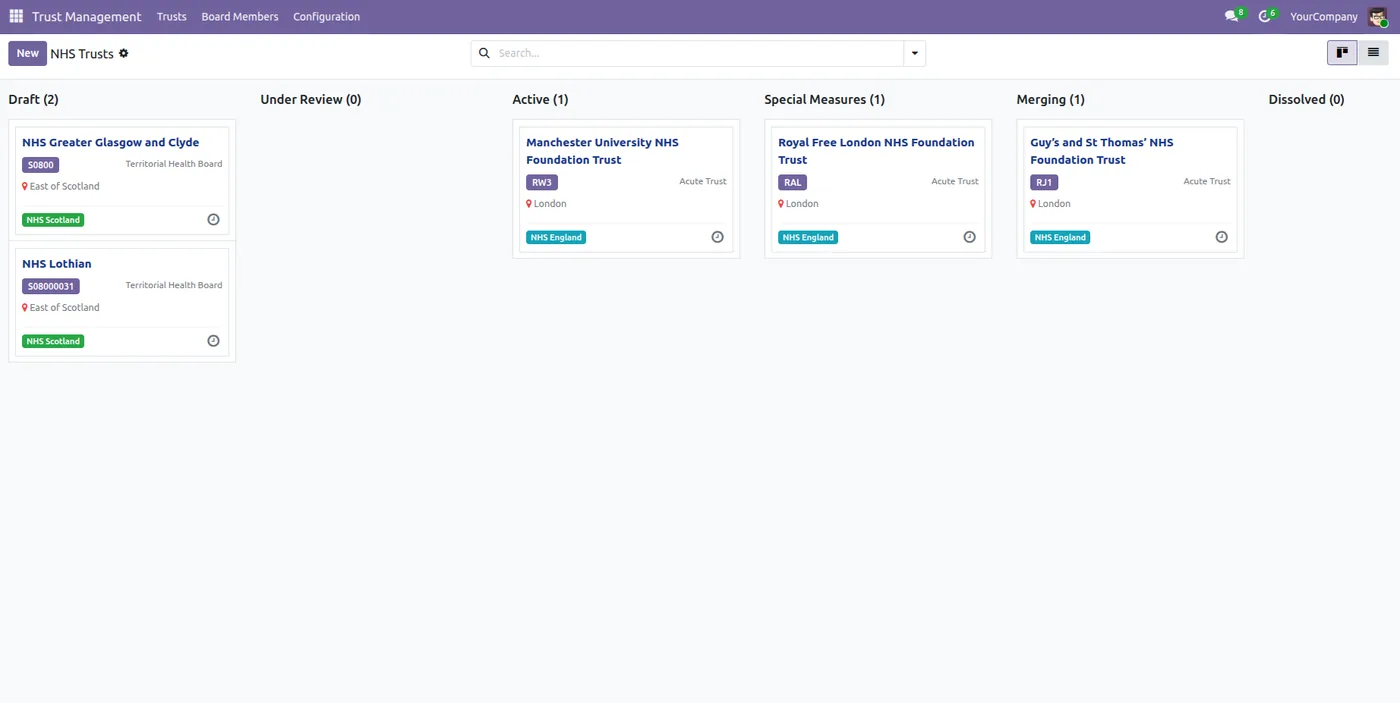
Every site and region, one trust record. Operations, CQC compliance, financials and workforce all derive from the same core trust profile — nothing lives twinned across five different systems, and Wales and Northern Ireland trusts extend the same structure rather than needing one of their own.
Reference data syncs itself. The ODS Sync module pulls current trust data straight from the NHS Digital ODS portal, so nobody is retyping it from a downloaded spreadsheet.
Board packs, ready in one click. Export a trust profile PDF or a full Excel directory the moment a report is due, not the afternoon before.
Board Assurance, wired to the risk register
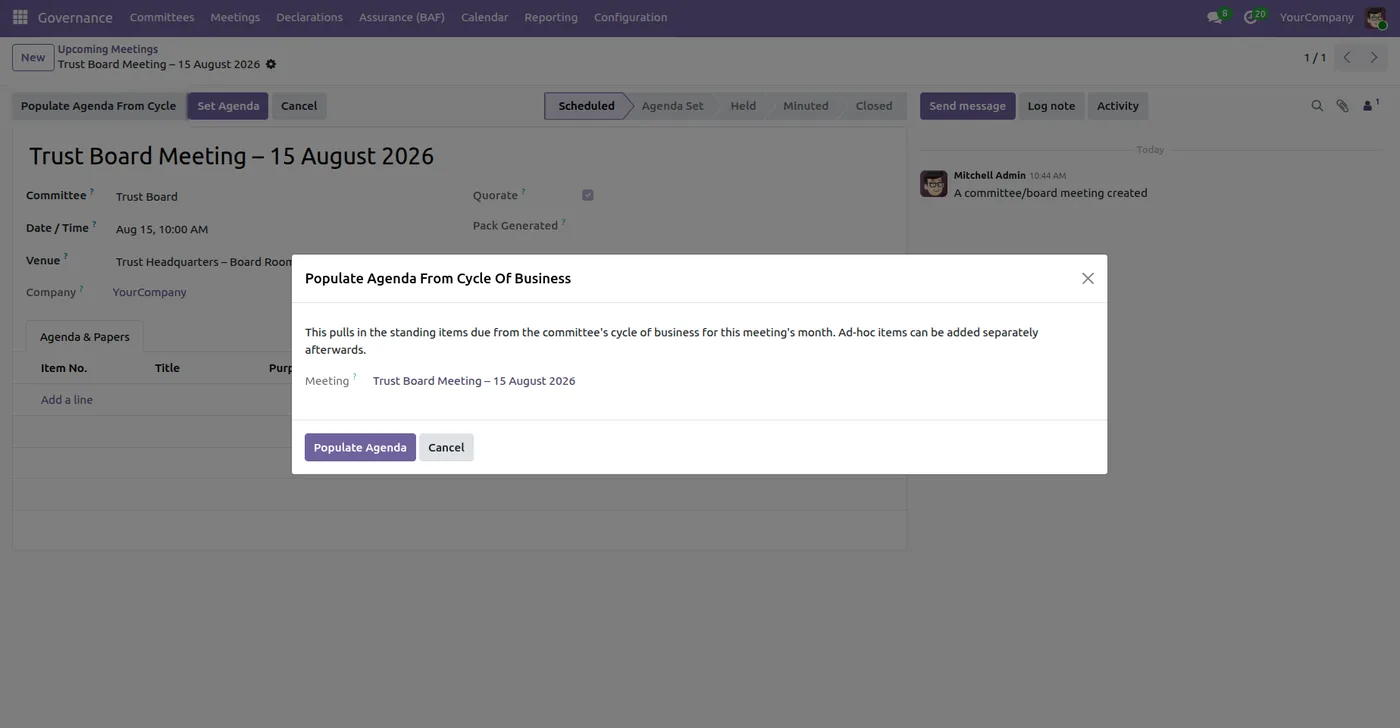
Meetings that run themselves. Agendas populate straight from each committee's own cycle of business — papers, minutes and actions get tracked automatically instead of chased down after the fact.
One risk register, trust-wide. Every incident and corporate risk sits on the same register the Board Assurance Framework reads from, so nothing gets logged twice or missed entirely.
Incidents tied to real locations. Every incident links back to the site, department and CQC inspection it actually concerns — not a generic entry in a spreadsheet.
Every site, certificate and device on one register
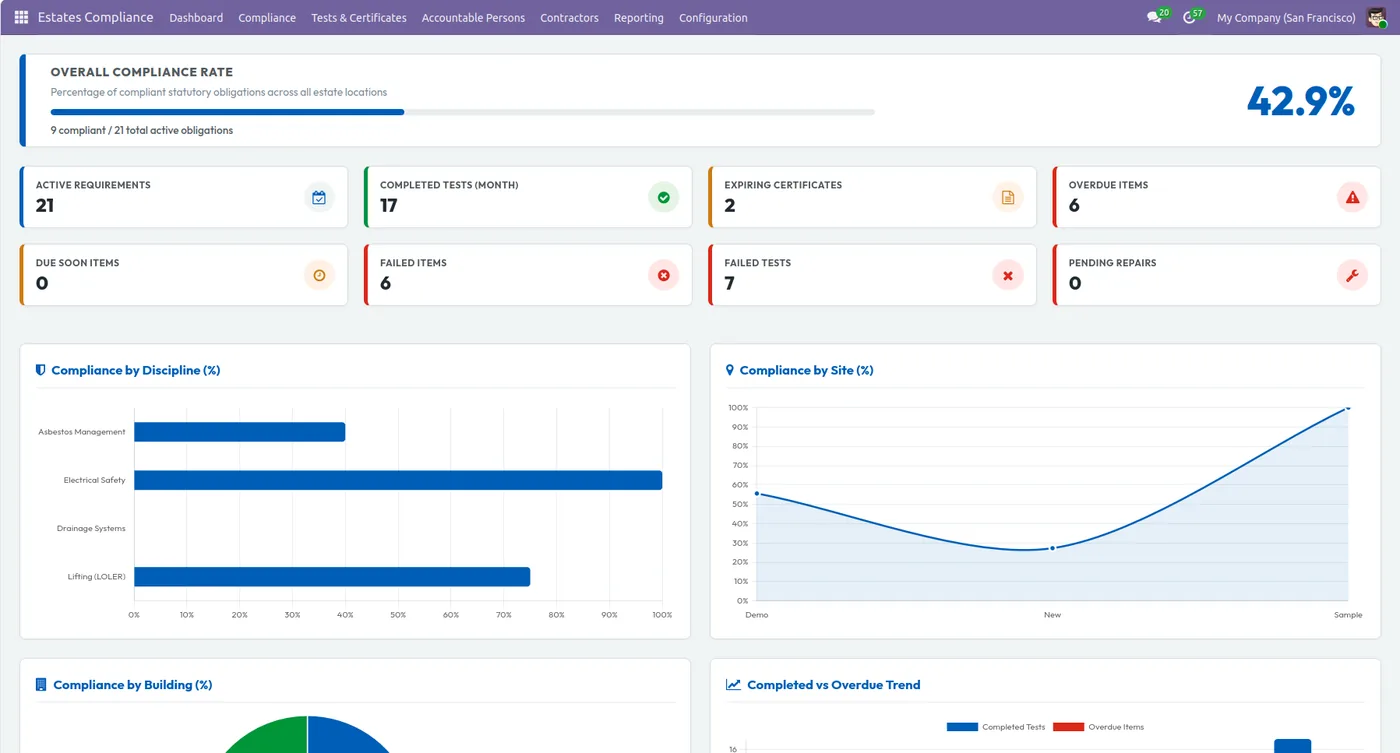
Every building, on one register. Sites, floors and spaces sit on a single estate register, complete with tenure and Six Facet condition survey data, instead of a spreadsheet per site.
Compliance scheduled, not chased. Water, fire, electrical, ventilation, asbestos, LOLER and medical gas checks run on a schedule tied to HTM references and named accountable persons.
Devices tracked to their next safety alert. Every device and its PPM/calibration schedule is registered, with MHRA/CAS safety alerts handled against the actual equipment they affect.
ERIC, generated — not compiled. The mandatory annual Estates Returns Information Collection builds itself from the estate register and compliance data already on file.
Establishment and compliance, side by side
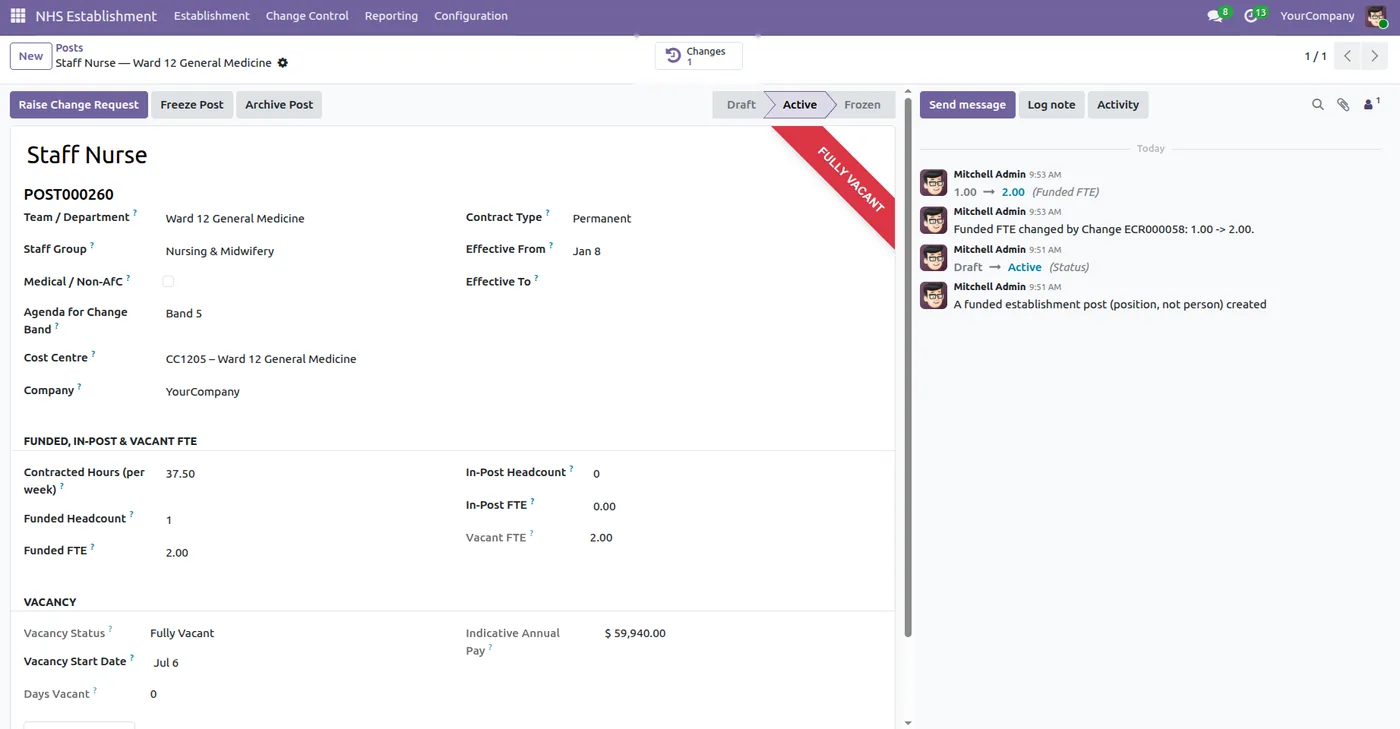
Funded, in-post or vacant — at a glance. The establishment register tracks every post by team, Agenda for Change band and cost centre, so a vacancy is visible the moment it opens.
Training compliance that doesn't wait for an audit. CSTF-aligned statutory training is tracked to expiry by role, with professional registration checked alongside it.
DSPT and complaints, always audit-ready
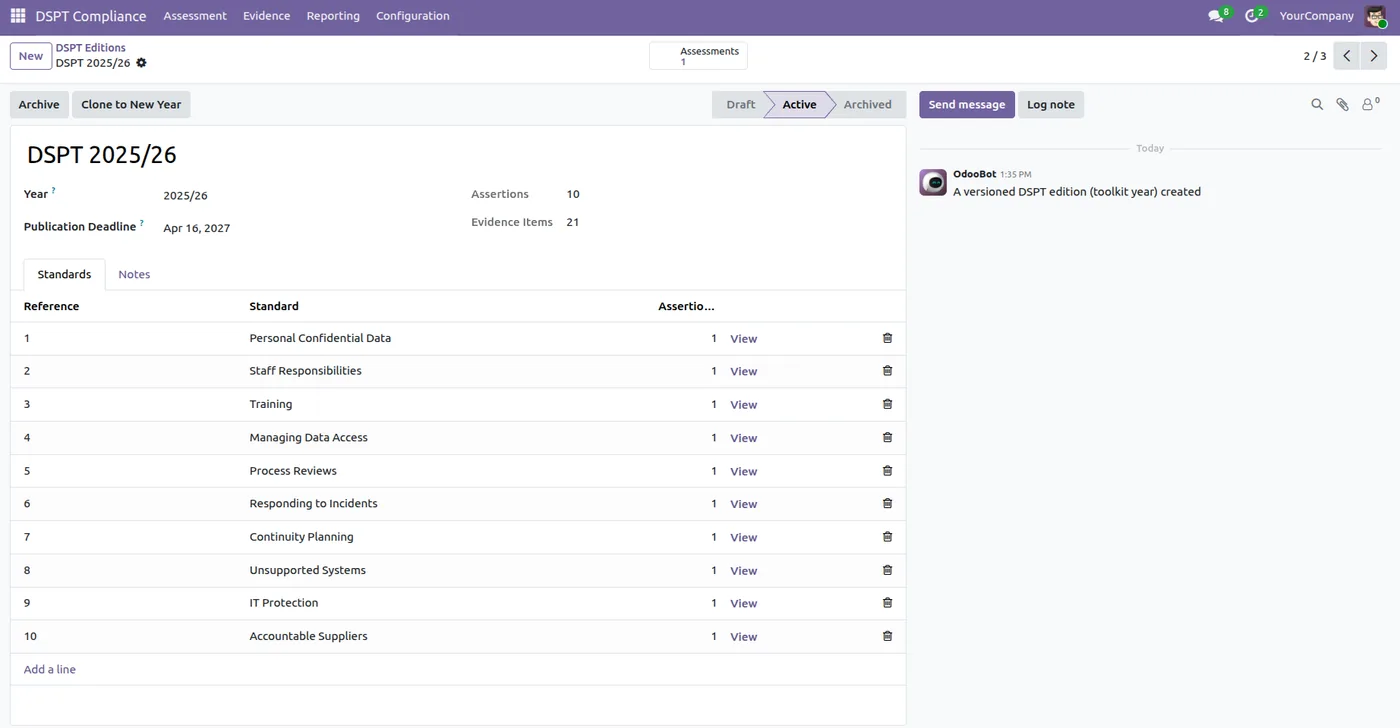
DSPT, built for the annual toolkit. Assertions, evidence, gaps and improvement plans map directly onto the Data Security and Protection Toolkit's own structure, ready for submission.
Every complaint tracked to resolution. Complaints and PALS concerns are logged, tracked and reported through to close-out, not left in an inbox.
Operational metrics, without patient data
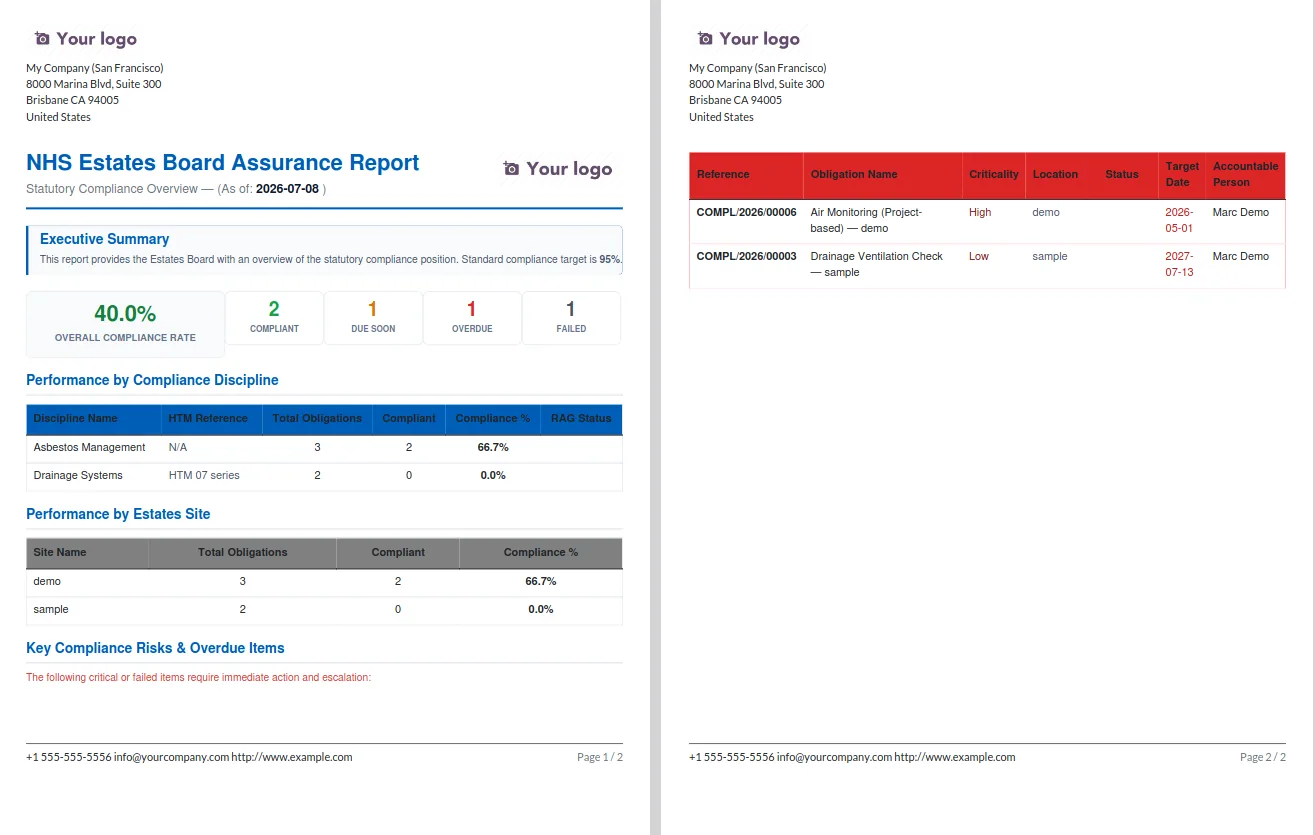
Governance, risk, estates and training data roll up into board-ready trust metrics — visible at trust level with no access to any underlying patient record. What a live trust command view surfaces:
Built to be owned, not rented
Open source, no lock-in
Own the source. Adjust the risk scoring model, estates compliance schedules or training requirements directly, without a vendor change request.
One data backbone
Governance, risk, estates and workforce share the same trust record, instead of a spreadsheet per committee and per return.
Roll out at your pace
Adopt by domain — start with governance and risk, then bring in estates compliance or training later, without re-platforming.
Aligned to UK frameworks
ODS, CQC, DSPT, ERIC, CSTF and Board Assurance Framework structures are modelled natively, so returns and assurance read off live records instead of rebuilt spreadsheets.
Board-ready reporting
Trust profiles, board assurance reports and ERIC returns export in one click from the same data operational teams work in every day.
No patient data in scope
A back-office suite only — governance, estates, workforce and compliance — so it deploys without EPR integration or clinical-data governance overhead.