The Complete Software Suite forPharmaceutical ERP
Run quality, deviations, traceability and vendor approval from one GMP record set. From vendor qualification to Certificate of Analysis — enforced approvals and audit-ready records in place of shared drives, paper batch records and spreadsheets.
Quality Command Core
QC specifications, test orders and Batch Manufacturing Records, with in-process quality checks (IPQC) and out-of-specification (OOS/OOT) investigations built in.
Deviations & CAPA
Log a deviation the moment something unexpected happens, classify its severity, run root cause analysis, and drive it through Corrective and Preventive Actions to verified closure.
Traceability & Release
Generate a Certificate of Analysis and trace batch genealogy in both directions, all backed by an ALCOA+ compliant, field-level audit trail.
SOP & Training
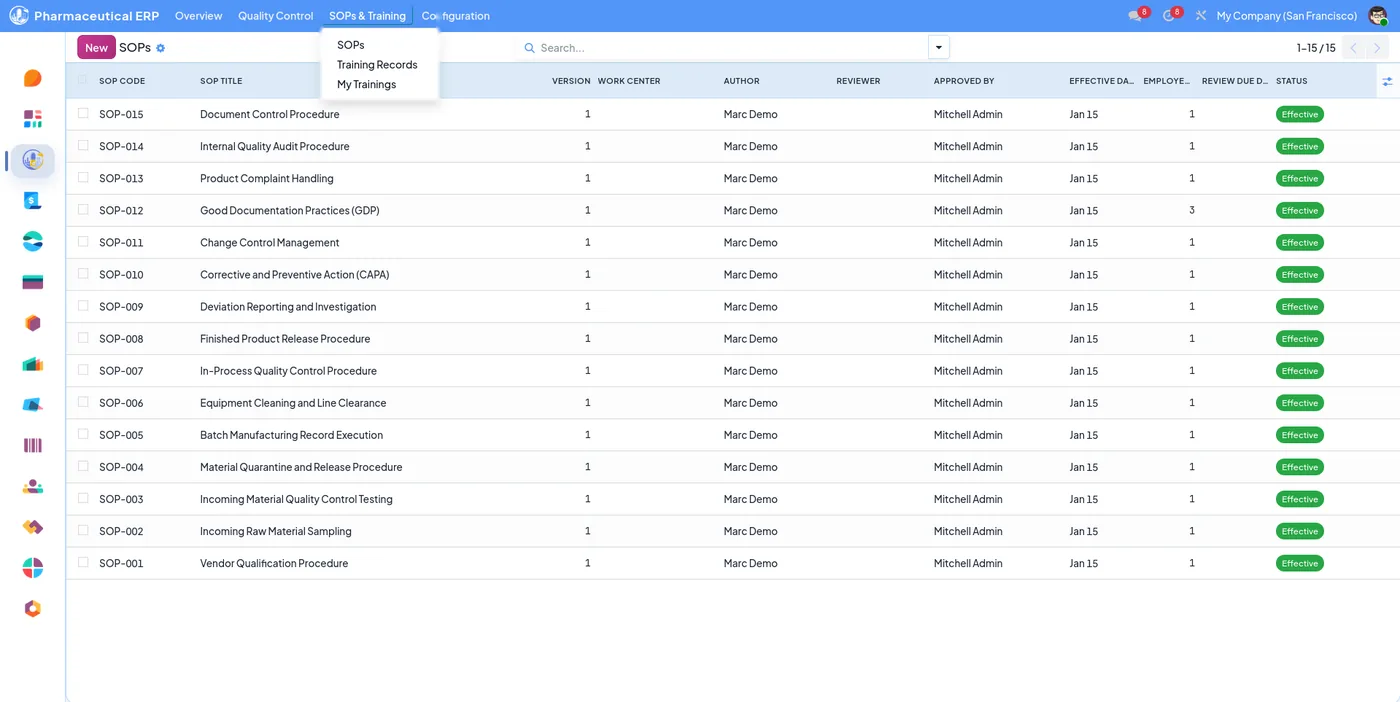
Version-controlled Standard Operating Procedures (Draft → Review → Effective → Archived), linked to Bill of Materials operations, with training compliance tracked to expiry.
Vendor Qualification
Qualify vendors through weighted questionnaire scoring and enforce your Approved Vendor List directly on purchase orders — no unapproved supplier slips through.
One record set, from receiving dock to release desk
Pharmaceutical manufacturing runs across incoming material control, in-process production and GMP batch release — each stage producing specification, quality and audit-trail records that have to stay linked across teams, sites and inspectors. Most manufacturers still run that on spreadsheets, a standalone QMS and paper batch records, reconciling signatures by hand while finished batches wait on the floor and audit risk grows. The five modules below unify materials, specifications, BMRs, deviations, CAPA and QA release inside one Odoo database, so every GMP decision is written against the same records your teams already use.
Every GMP record,
one shared configuration
One shared configuration, for every module. A single set of configuration, menus and reference data every other module in the suite builds on — nothing gets configured twice.
Four roles, one privilege model. User, QA, Manager and Administrator sit under escalating technical groups, with feature groups unlocking each optional tier as you switch it on.
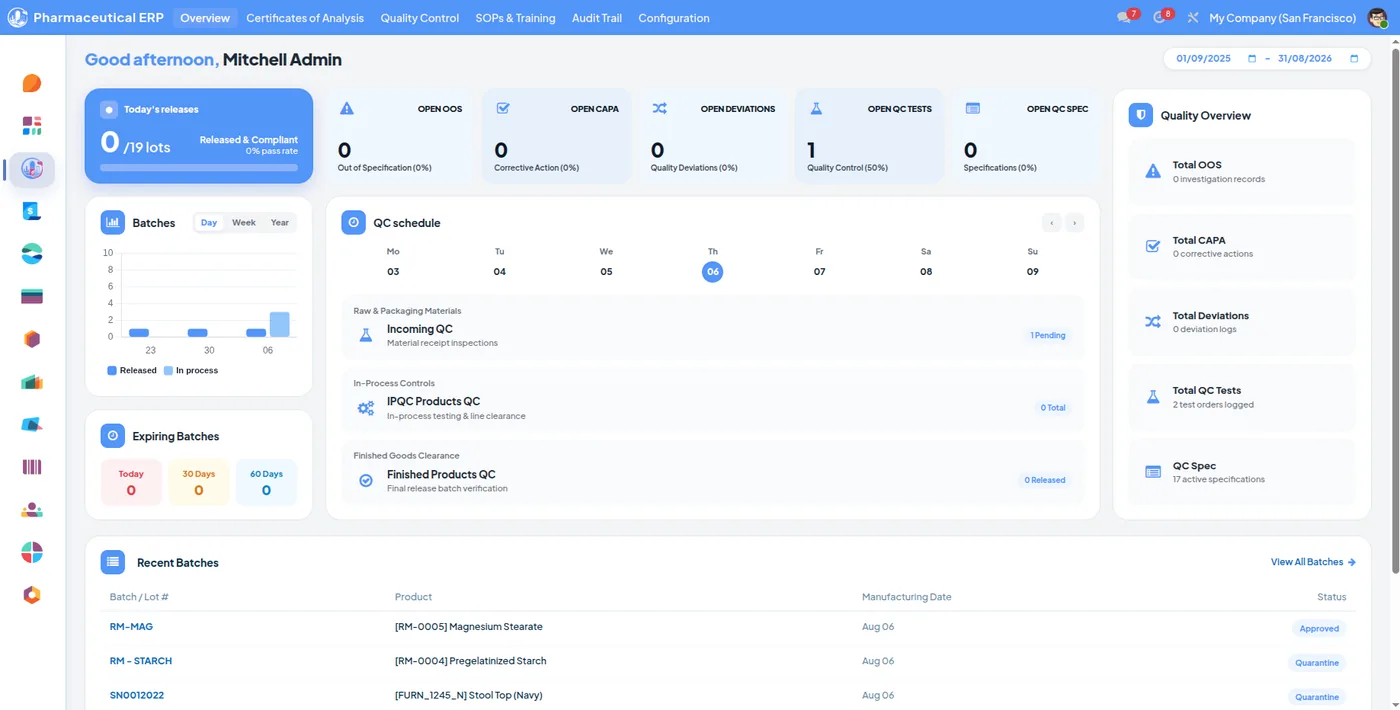
One dashboard, every open item. Open QC tests, the quarantine queue, deviations and CAPA counts roll into a single live dashboard, filtered by role.
Specs, batch records and investigations, together. Specifications, Batch Manufacturing Records, in-process quality checks and out-of-specification investigations all live in one record set, not scattered across separate logs.
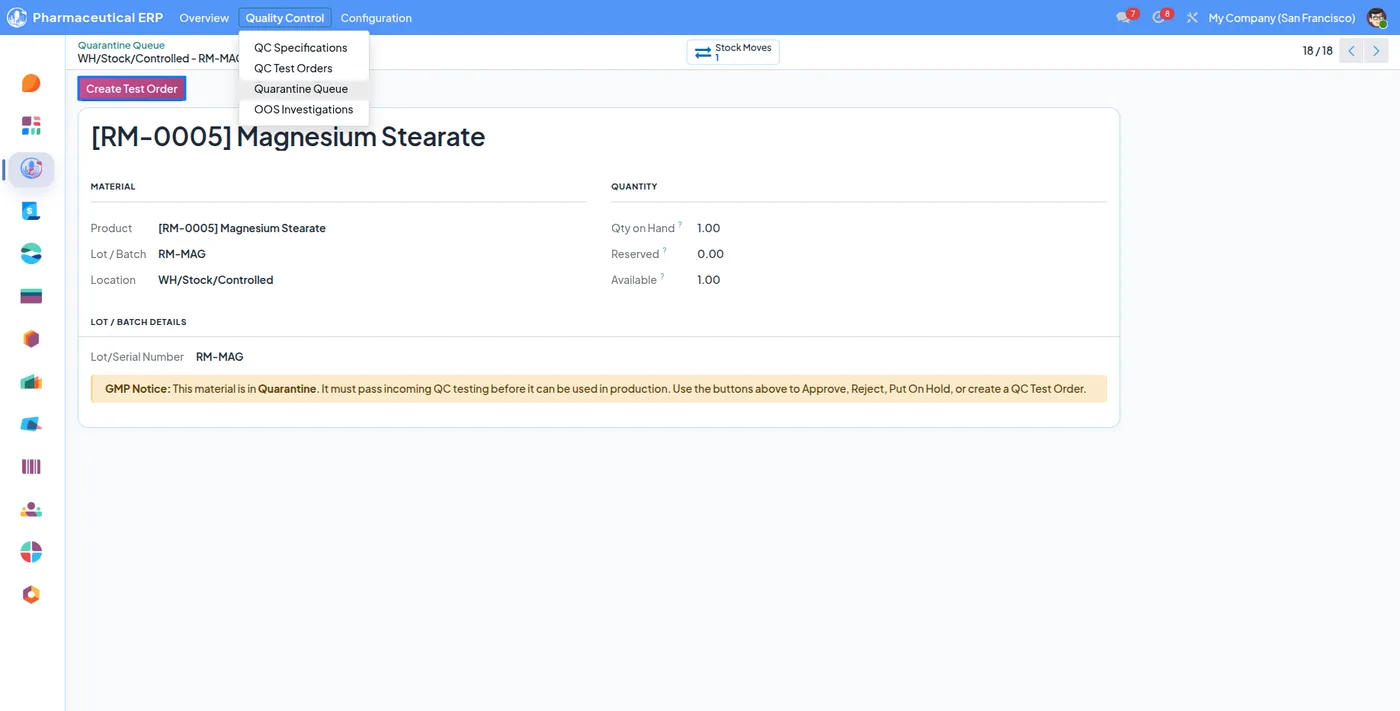
A deviation raised is a deviation tracked to closure
Classified the moment it's raised. Every deviation is logged critical, major or minor immediately, tagged to the manufacturing, QC or packaging stage it happened at.
Root cause, not just a closed ticket. A structured set of root-cause categories drives the investigation toward a real corrective or preventive action.
CAPAs verified independently. CAPAs are typed, tracked and verified separately from the deviation that raised them, before either record can close.
Every closure ends in a decision. A closed deviation always carries an explicit release-or-reject call, tied back to the affected lot.
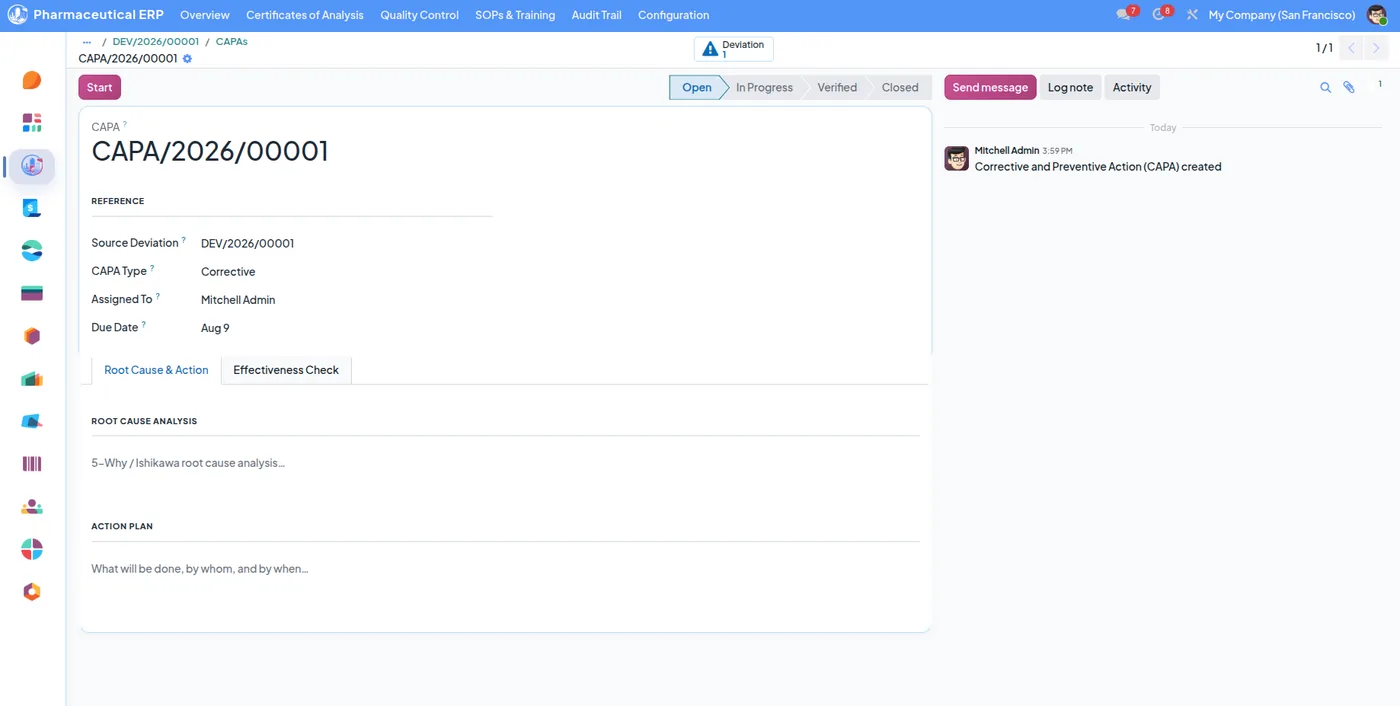
Genealogy and CoA, generated from real results
Trace any batch, either direction. Follow a finished batch back to every input lot, or a raw-material lot forward to every batch it entered — on live data, not a reconciled spreadsheet.
CoA, generated — not typed up. The Certificate of Analysis comes straight from recorded QC results and locks the moment a batch is released.
One release desk, one final call. QA gives, or refuses, the final disposition on a completed batch from a dedicated release queue.
Every change, who and when. Old value, new value, user and timestamp are captured on every change — ALCOA+-aligned throughout, not just at sign-off.
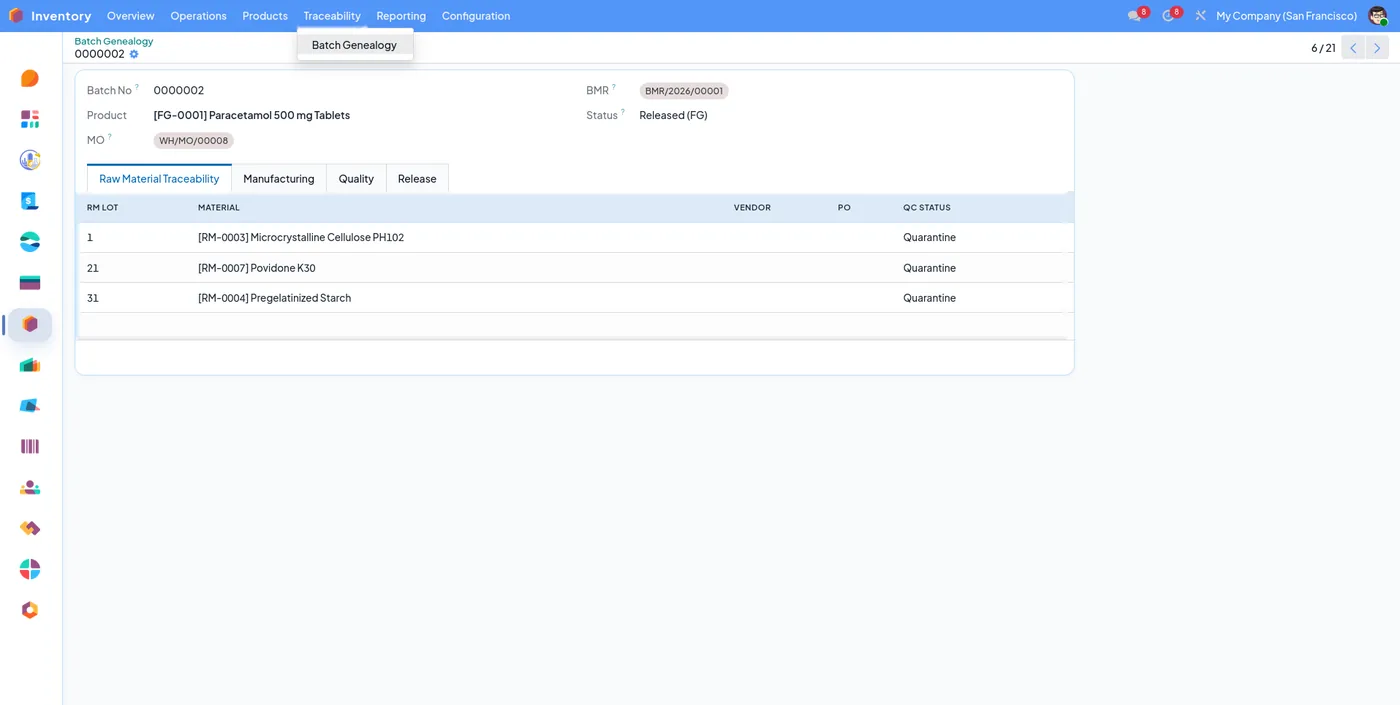
A batch that isn't ready doesn't get released
The QA release queue lives natively in the same database as the stock it is releasing, so an open deviation, an unfinished check or an untrained operator blocks a release the moment it appears — not at month end, when it's too late to matter.
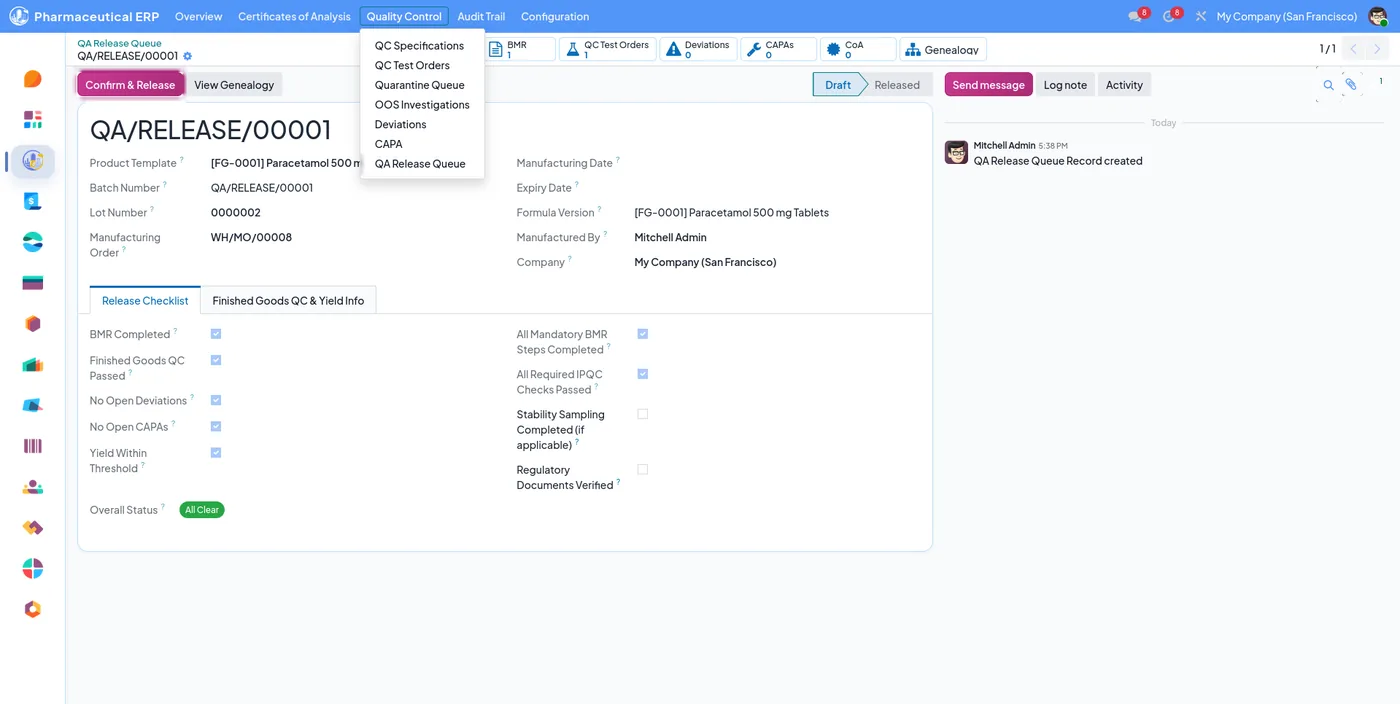
Only a trained operator can run the operation
Only the current version is ever live. Draft, Under Review, Effective, Archived — so an operator can never accidentally follow a superseded procedure.
Procedures, filtered to the job. SOPs are filtered directly onto the Bill of Materials operations they govern, not filed away in a separate binder.
80% or it doesn't count. Training is scored against a default pass mark before a record counts as complete.
Lapsed training expires itself. A nightly job expires stale training automatically, so a lapsed certificate never quietly stays "valid".
Buy only from a supplier who has earned it
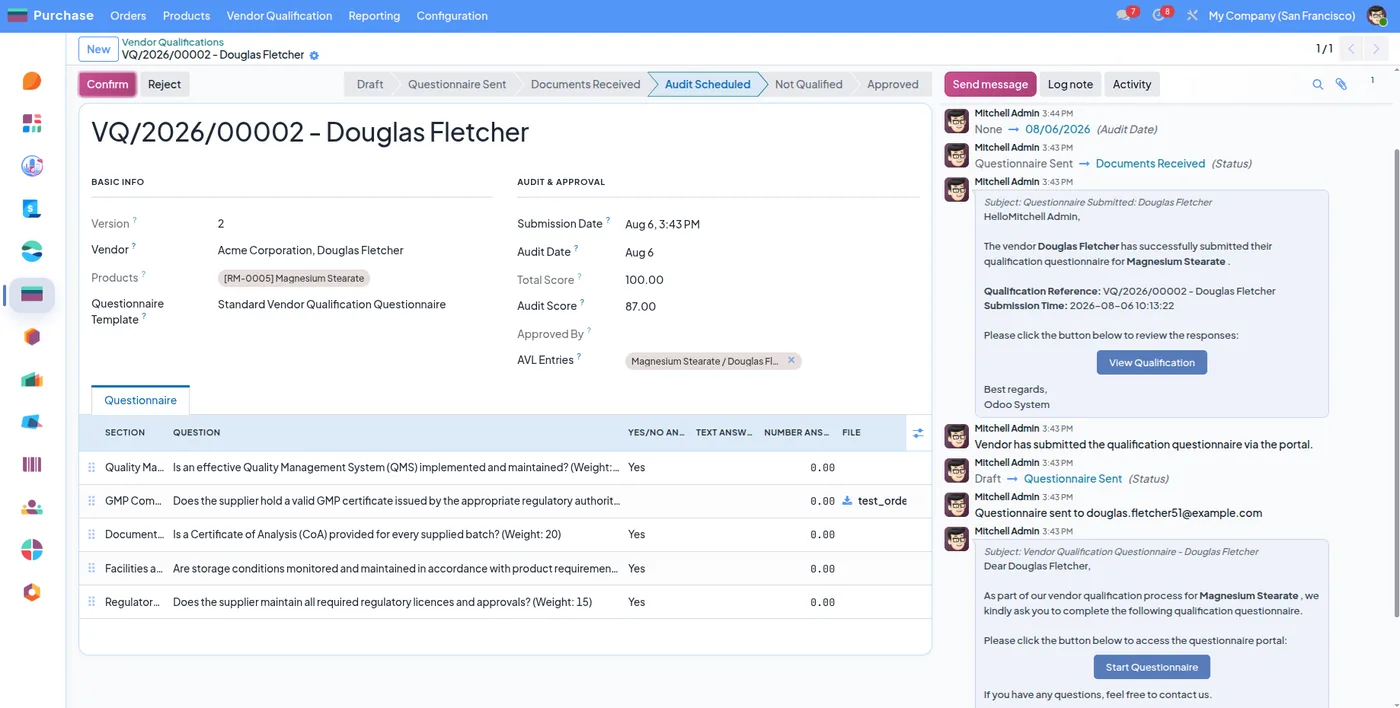
Every vendor, scored the same way. Weighted questionnaire templates score suppliers against the criteria your quality function actually cares about.
No PDFs round-tripped by email. Suppliers answer their qualification questionnaire through an emailed portal link instead.
70%, or no Approved Vendor List. A configurable pass mark decides whether a vendor earns a place on the list — 70% by default.
The purchase order is the gate. Orders are checked against the Approved Vendor List automatically, so an unqualified supplier can't be bought from by accident.
Three workflows, fully connected
Procurement
Manufacturing
Quality Disposition
Every step is covered by role-based access (User, QA, Manager, Administrator) and an immutable, field-level audit trail — nothing is edited without a record of who changed what, and when.
What a live quality dashboard shows
Open checks, training compliance, active CAPAs and approved-vendor coverage, rolled up in one place instead of chased across spreadsheets.
Built to be owned, not rented
Open source, no lock-in
Own the source. Adjust CAPA severity rules, training pass marks or AVL scoring directly — nothing sits behind a vendor black box.
One data backbone
Quality, procurement, manufacturing and training share the same records, instead of a standalone QMS reconciled against the ERP overnight.
Roll out at your pace
Adopt by site or by product family — start with vendor qualification or deviations, then bring in the rest of the suite later.
Efficient procurement
Vendor questionnaires, weighted scoring, the Approved Vendor List and a QA gate on the purchase order — linked natively to products, lots and QC specifications, not bolted on as a side system.
Enforced segregation of duties
Four roles sit under one privilege model, with QA deliberately held out of create and delete rights — data entry and approval stay with different people, enforced by the system rather than by policy.
Centralised data access
Role-based dashboards give operators, QC analysts, QA managers and directors real-time visibility from one login, all reading the same GMP records an inspector would read.